Serving Castro Valley, CA and surrounding areas. (510) 947-6192
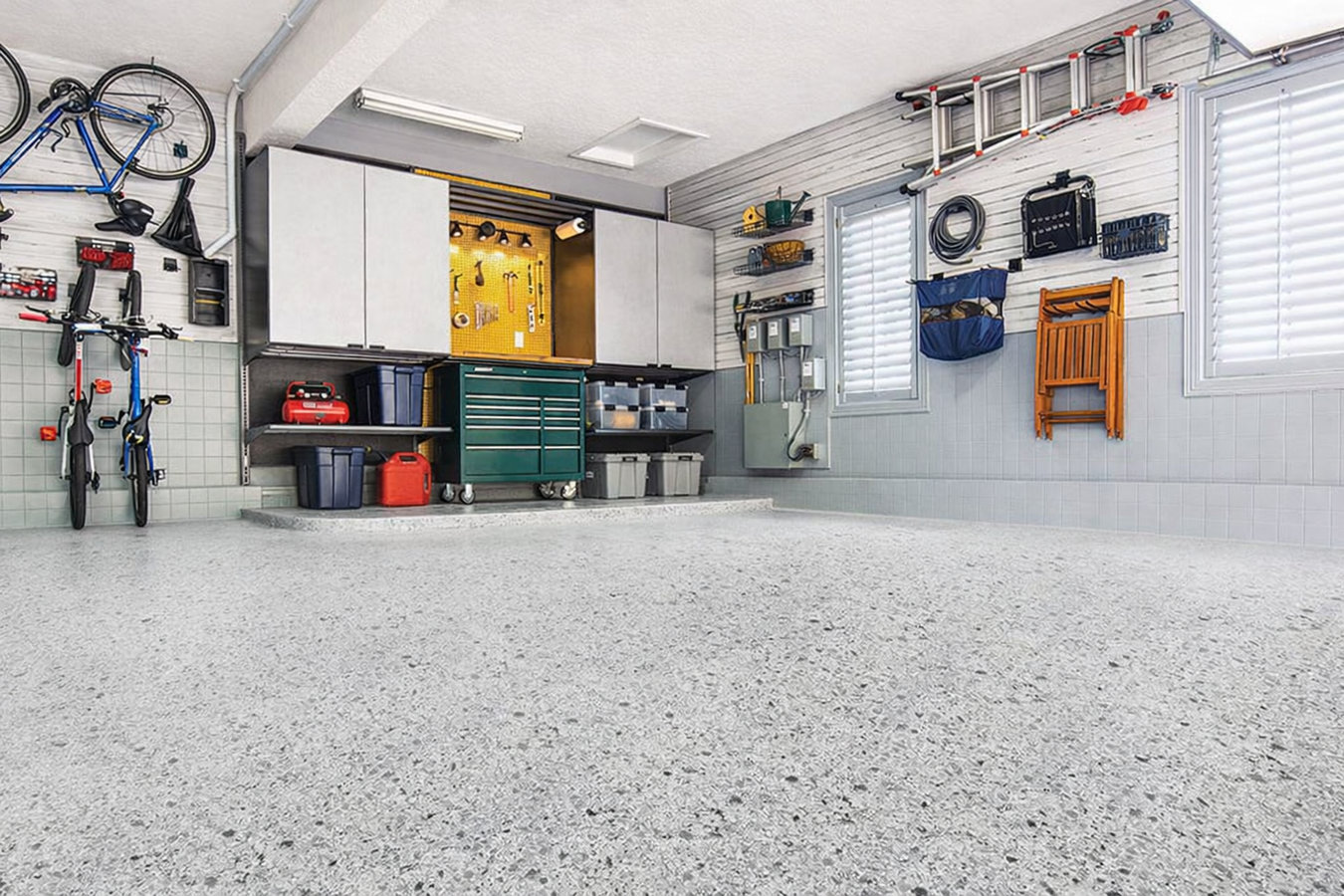
Castro Valley Concrete replaces garage floors, builds driveways, pours patios, and installs retaining walls for Newark homeowners. We know the postwar ranch homes near NewPark Mall and the Dumbarton Bridge corridor, the clay soils that crack slabs every wet season, and what it takes to get a permit through the City of Newark. We respond within 1 business day.
Most Newark homes were built between the 1950s and 1980s, and the original garage floors in those homes have been sitting on clay soil for 40 to 70 years without adequate subbase isolation. Surface spalling, low spots, oil-stained pitting, and edge cracking are all signs that the floor has reached the end of its useful life. Our garage floor concrete work includes full removal of the old slab, proper subbase compaction at the depth the Newark clay requires, and a new pour with control joints positioned to manage future movement rather than ignore it.
Newark driveways on standard 5,000 to 7,000 square foot suburban lots are often the first concrete surface to show wear, because vehicles concentrate load in the same tire tracks year after year as the clay beneath the slab moves. We see a consistent pattern across Newark neighborhoods where the driveway apron near the garage has settled lower than the curb connection, creating a drainage and trip hazard. We remove the old slab, re-grade the subbase, and pour a replacement with the slope and joint spacing that manages both water and soil movement.
Some Newark properties, particularly those built on slightly elevated lots or at the edge of the older residential grid, have retaining walls that have reached 40 to 50 years old. Clay soil exerts significant lateral pressure on a retaining wall, especially after the wet season saturates the soil mass behind the wall. We build replacement walls with footings sized for the actual soil load, weep holes spaced to relieve hydrostatic pressure, and wall thickness matched to the height being retained.
Newark's mild climate - dry summers and wet but frost-free winters - makes a concrete patio a usable outdoor surface most of the year. Newark lots typically have enough rear yard space for a functional patio slab, and homes near the Don Edwards San Francisco Bay National Wildlife Refuge corridor often have views worth building toward. We pour patios sloped correctly away from the house foundation and sized to fit the lot without blocking drainage paths.
Fences, patio covers, and ADU foundation walls all need footings that reach below the active clay zone - the depth at which seasonal moisture causes soil movement. In Newark's clay-heavy flatlands, that depth is greater than the minimum required on stable soil sites. We pour footings based on what the soil conditions at each specific Newark property call for, not on a generic depth chart.
Newark grew rapidly after World War II, and most of its single-family housing was built between the 1950s and 1980s on standard suburban lots. Those ranch-style and tract homes have concrete driveways, garage floors, walkways, and sometimes retaining walls that were poured during those same decades. Subbase preparation methods from that era did not account for the depth at which expansive clay soils in the East Bay flatlands move seasonally. The result is that most original concrete in Newark neighborhoods has been absorbing soil movement for 40 to 70 years, and surface cracking, joint separation, and low spots are the visible evidence of that accumulated stress.
The rainy season runs from roughly November through March, and Newark sees about 14 inches of annual rainfall - enough to saturate the clay and drive a meaningful expansion cycle every year. Homes on the western side of the city, near the Dumbarton Bridge approach and the bay, also face salt air and consistent wind off the water that accelerates surface degradation on unsealed or cracked concrete. A contractor who uses the same base depth and the same mix design for every Bay Area job, without adjusting for the specific clay profile and moisture exposure at each Newark site, is delivering flatwork that will match the failure pattern of the original slab within a few years.
We pull permits for Newark concrete projects through the City of Newark Community Development Department, which handles building permits for both structural concrete work and projects that affect site drainage. For most standard driveway replacements within an existing footprint, no permit is required. Retaining walls above 4 feet and any project that redirects stormwater runoff require a permit and inspection. We clarify this for every project during the on-site estimate so there are no surprises mid-job.
We work throughout Newark - from the older neighborhoods near NewPark Mall at the center of the city to the streets closer to the Dumbarton Bridge on the western edge. Homes in the central Newark neighborhoods along Thornton Avenue and Cedar Boulevard represent the core of the city's postwar single-family stock, and that is where we see the most consistent demand for driveway and garage floor replacement. Properties near the western bayfront corridors tend to need sealing and surface repair more often due to salt air exposure.
Newark sits between Union City to the north and Fremont to the south along the I-880 corridor. We also serve neighboring Milpitas, where the bay clay soil conditions and the 1960s-1970s ranch home housing stock are very similar to Newark's. Homeowners on both sides of the Newark-Fremont border contact us regularly, and we cover both cities on the same service schedule.
We respond within 1 business day. For garage floors and driveways in Newark, we always do an in-person visit before quoting - the existing slab condition, drainage pattern, and soil saturation signs at the site directly shape how we price the subbase work.
We visit your Newark property, check the existing concrete and clay soil conditions, and give you a written estimate itemized by demolition, base preparation, materials, and finish. We identify permit requirements at this stage and explain what to expect on timeline if a permit is needed.
We remove the old concrete, compact the subbase to the depth the clay conditions at your site require, and pour the replacement with control joints placed to direct movement rather than fight it. For garage floors, we apply a vapor barrier between the subbase and the pour to manage moisture migration from the clay.
Before we leave, we walk you through the curing timeline - no vehicle traffic for at least 7 days, no heavy loads for 28 days. We also apply a penetrating sealer on request, which is particularly worthwhile for Newark homes on the western side of the city near the bay where salt air accelerates surface wear.
We serve Newark homeowners from the Dumbarton Bridge corridor to the central neighborhoods near NewPark Mall. Free on-site estimates, no obligation.
(510) 947-6192Newark is a city of about 48,000 people in southern Alameda County, positioned along the eastern shore of San Francisco Bay between Fremont and Union City. The city is primarily residential, with most of its housing stock built between the 1950s and 1980s as part of the postwar suburban expansion that swept through the East Bay. Single-family ranch homes on standard 5,000 to 7,000 square foot lots dominate the central and eastern neighborhoods, while newer townhome developments have been added near the Dumbarton Bridge area in more recent decades. According to the U.S. Census Bureau, the homeownership rate in Newark sits around 60 percent - high for a Bay Area city - which means a large share of residents are the ones making decisions about repairs, upgrades, and maintenance on their properties.
The city is anchored by NewPark Mall, which has served as the commercial hub of Newark and the surrounding communities for decades. To the west, the Don Edwards San Francisco Bay National Wildlife Refuge borders the city along the bayfront, and the Dumbarton Bridge - the southernmost bay crossing - sits at Newark's western edge. Homes near the bay experience more wind and salt air than those further inland, a real difference in how concrete and exterior surfaces hold up over time. We also serve Union City to the north, where the housing stock and soil conditions closely mirror what we see in Newark's older neighborhoods.
Custom concrete driveways built for durability, curb appeal, and long-term value.
Learn moreBeautiful concrete patios designed and poured to extend your outdoor living space.
Learn moreDecorative stamped concrete that mimics stone, brick, or tile at a fraction of the cost.
Learn moreSafe, smooth concrete sidewalks installed to code for residential and commercial properties.
Learn moreStrong, level concrete garage floors finished to resist stains, oil, and heavy loads.
Learn moreEye-catching decorative concrete surfaces that add style to any interior or exterior space.
Learn moreSolid concrete retaining walls built to hold back soil and prevent erosion on any slope.
Learn moreProfessional concrete floor installation for homes, warehouses, and commercial spaces.
Learn moreSlip-resistant, weather-proof concrete pool decks that look great season after season.
Learn moreSturdy concrete steps crafted for safety, code compliance, and lasting first impressions.
Learn morePrecision-poured concrete slab foundations engineered for stability and long-term performance.
Learn moreComplete foundation installation services for new construction and structural upgrades.
Learn moreDurable concrete parking lots designed to handle heavy traffic and stand up to the elements.
Learn moreProperly sized and poured concrete footings that provide a solid base for any structure.
Learn moreExpert foundation raising to correct settling, restore level, and protect structural integrity.
Learn morePrecise concrete cutting for repairs, expansion joints, utility access, and demolition work.
Learn moreServing these cities and communities.
Newark homes built in the 1950s through 1980s often have concrete that is overdue for replacement. The sooner you address cracking and settling, the less likely it is to become a drainage or safety problem.