Serving Castro Valley, CA and surrounding areas. (510) 947-6192
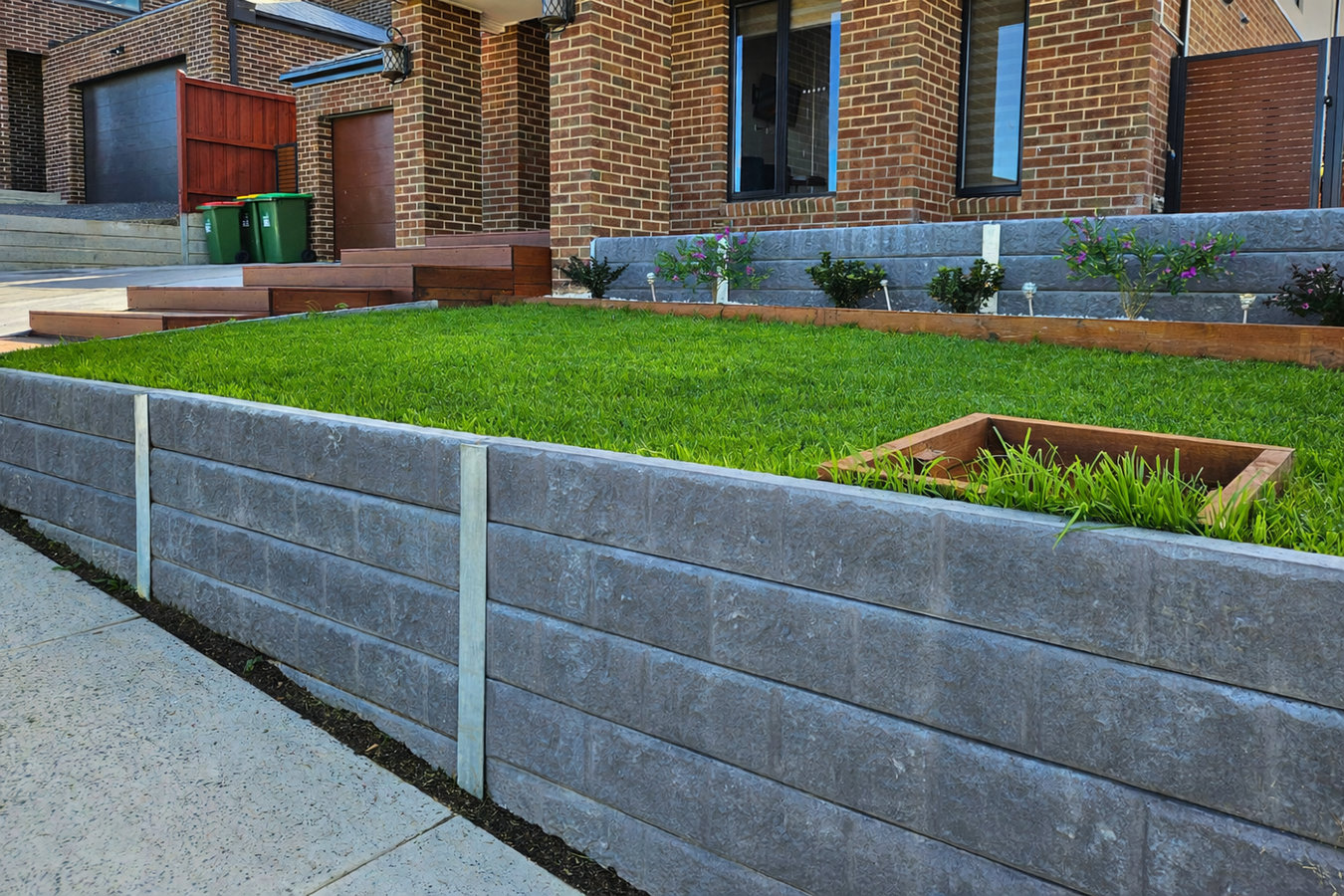
Soil creeping toward your driveway or foundation? We build concrete retaining walls designed for Castro Valley's clay soils and hillside lots - with drainage, permits, and engineering handled so your yard stays put through every rainy season.
Concrete retaining walls in Castro Valley hold back soil on sloped and uneven lots so it does not slide, erode, or shift toward your driveway or foundation - most residential projects take two to five on-site days, with the wall ready to landscape around after a curing period of a few weeks.
Castro Valley's hillside terrain means retaining walls are rarely optional on sloped properties. When saturated clay soil gets heavy after a wet winter, slopes put real pressure on anything standing between them and your home. A properly built concrete wall intercepts that pressure before it reaches your foundation, driveway, or patio - and homeowners comparing options often weigh a poured concrete wall against a block retaining wall before settling on what fits their lot and budget.
Walls also create usable flat space. If you have a terraced area in mind, a retaining wall is the first step - and once it is in place, work like concrete floor installation or a new patio on the level surface behind the wall becomes straightforward.
A ridge of soil building up along your driveway edge, or dirt encroaching toward your home's foundation, means the slope above is moving. On Castro Valley's hillside lots, this happens during wet winters when saturated clay soil gets heavy and unstable. Left alone, this movement can damage concrete flatwork and create drainage problems around your home.
A wall that tilts forward, shows horizontal cracks across its face, or has gaps where it meets the soil is under stress it was not designed to handle. This often happens when drainage behind the wall fails after several Bay Area winters. Replacing or reinforcing a leaning wall before it falls is far less expensive than dealing with the damage afterward.
Standing water collecting at the bottom of a sloped area after rain means the slope is not draining properly. In Castro Valley's clay-heavy soil, poor drainage accelerates erosion and makes slopes unstable over time. A retaining wall with proper drainage built in can redirect that water and protect the slope from further movement.
If part of your yard is too steep to mow, plant, or walk on safely, a retaining wall can turn that wasted space into a flat, usable area. Many Castro Valley homeowners with tiered lots have added walls to create level garden beds, patios, or play areas on what was previously just a hillside you had to look at.
We handle the full project from initial site assessment through the county inspection. That means excavating the slope, forming and pouring the concrete wall with reinforcing steel, and installing drainage gravel and perforated pipe behind the wall so water has a clear path away from the structure. Drainage is not an afterthought here - it is built into every wall we pour, because it is the single biggest factor in how long a wall lasts on a Castro Valley hillside lot.
For taller walls that require engineering review under Alameda County permit requirements, we coordinate with a licensed structural engineer as part of our process. Once the wall is cured and backfilled, the terraced space behind it is ready for whatever you plan to build - whether that is a concrete floor installation for a new patio or a level garden area. We also pair wall projects with concrete footings when the wall will support a structure above it.
Best for most residential hillside lots - durable, handles heavy soil pressure, and built to last 50 years or more with proper drainage.
Suits lower-height applications where the wall's own weight holds the soil, without requiring deep footings or rebar.
The right choice for taller walls on steep lots where engineering review is required and soil pressure is significant.
Ideal for large hillside yards where a single tall wall is not practical - multiple shorter walls step the slope in manageable sections.
Castro Valley sits in the East Bay foothills, and most residential lots have at least some slope. The clay-heavy soil that runs through much of the area swells when it absorbs winter rain and shrinks back during dry summers. That repeated expansion and contraction puts more stress on a retaining wall than sandy or loamy soil would - and a contractor who does not account for this by using proper drainage and the right wall thickness is setting you up for a wall that cracks or leans within a few years. Experienced local contractors understand the soil conditions here because they have seen what happens when those conditions are ignored.
Castro Valley is also unincorporated Alameda County, which means permit requirements for retaining walls over four feet tall are handled through the county - not a city building department. That process adds a few weeks to the project timeline but also means the design gets a professional review, which matters on steep or unstable hillside lots. We serve homeowners throughout the area, including neighboring Union City and Hayward, where hillside lots and clay soils present the same set of challenges.
We respond within 1 business day. An on-site visit is essential for retaining wall estimates - slope angle, soil type, wall height, and equipment access all affect the scope and price in ways a phone call cannot capture.
You receive a written quote covering excavation, drainage materials, forming, the pour, and backfill. For walls requiring an Alameda County permit, we manage the application and any required engineering submittal from start to finish.
The crew excavates the slope, sets forms, places reinforcing steel, and installs drainage gravel and pipe behind the wall before any concrete is poured. You can see the drainage system in place before it gets buried.
Concrete is poured in sections as needed, backfilled after curing, and the site is cleaned up fully before we leave. If a permit was pulled, we coordinate the county inspection - you do not need to arrange it yourself.
We respond within 1 business day. There is no obligation - just a written estimate and a straight answer about what your hillside needs.
(510) 947-6192Every wall we build includes gravel backfill and perforated drain pipe installed before the soil goes back in. The East Bay's wet winters make this non-negotiable - water pressure behind a wall with no drainage is the leading cause of wall failure in this area.
Castro Valley is unincorporated Alameda County, and permit requirements for taller walls are handled through the county rather than a city office. We manage the entire application process, including any required engineering, so your project is legal and documented from day one.
We have worked on Castro Valley's hillside lots and understand how East Bay clay soil behaves through wet winters and dry summers. A wall built without that local knowledge is a wall built to the wrong spec for the conditions it will face. We size drainage and footing depth to your specific lot.
You receive an itemized written estimate covering every phase - excavation, drainage, forming, pour, backfill, and permit fees - before we start. If unexpected site conditions arise, we discuss the impact on cost before proceeding, not after. The number on your final invoice matches what you agreed to.
The American Concrete Institute sets the industry standards for how retaining walls should be designed, mixed, and cured - and those standards exist because walls that skip steps fail. Every retaining wall we build follows those standards and is built to pass an Alameda County inspection, which means it is built to hold up under real-world hillside conditions.
Once your slope is secured, we can pour a level concrete floor on the terraced area your new wall creates.
Learn moreRetaining walls require properly engineered footings - we build them to carry the full load of your wall and the soil behind it.
Learn moreCastro Valley's dry season fills up fast - the sooner you reach out, the sooner we can get on your calendar before the best project slots are gone.