Serving Castro Valley, CA and surrounding areas. (510) 947-6192
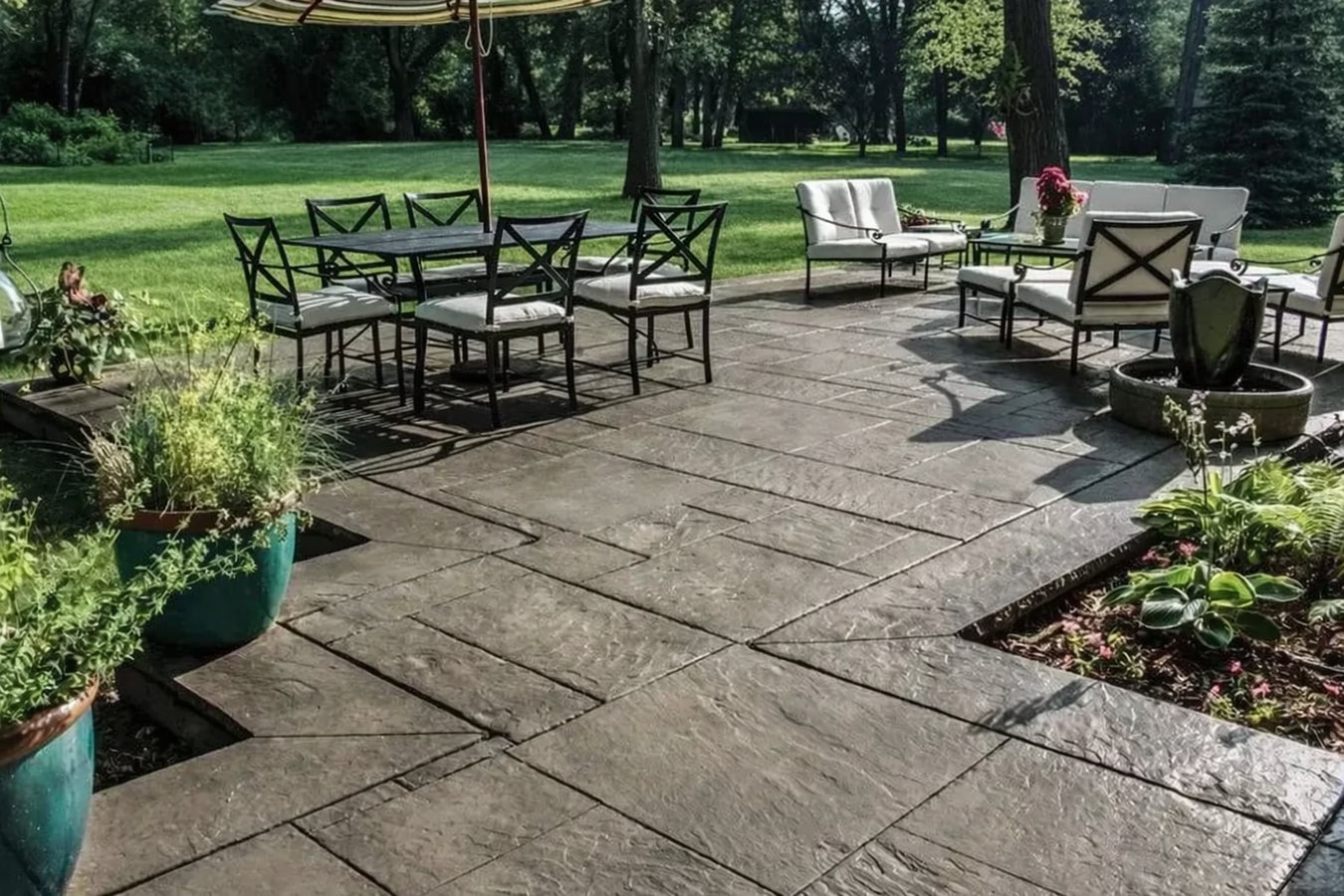
Castro Valley Concrete handles stamped concrete, driveways, patios, retaining walls, and slab foundations for Pleasanton homeowners. We know the 1970s and 1980s ranch homes near Main Street, the newer subdivisions off Bernal Avenue, and the clay soil conditions that crack flatwork throughout the Tri-Valley. We respond within 1 business day.
Pleasanton homeowners invest in their properties, and a stamped concrete patio or driveway apron is one of the more visible upgrades you can make to a well-kept home. Our stamped concrete services use patterns and integral color mixes suited to the ranch, split-level, and two-story tract homes common throughout Pleasanton. We account for the clay soil base conditions that make proper subbase preparation more important here than in cities with sandier ground.
Many Pleasanton driveways were poured in the 1970s, 1980s, and 1990s and are now at or past the point where replacement costs less over 10 years than continued patching. Tri-Valley clay soils have been working on those slabs for decades, and the evidence shows up as surface spalling, joint separation, and cracks that grow a little wider every winter. We remove the old concrete, prepare the subbase for these specific soil conditions, and pour a new driveway built to outlast the next 30 years.
Pleasanton neighborhoods built on sloped terrain, particularly south and east of downtown, often have retaining walls that are several decades old. These walls deal with the same clay soil pressure every rainy season, and many are showing signs of movement or drainage failure. We build poured concrete retaining walls with properly placed drainage weep holes and a base footing sized for the soil load, not the minimum that met code 40 years ago.
Pleasanton's warm summers and mild winters make outdoor living practical most of the year, and a level, well-drained patio slab is the most durable foundation for that space. We pour patios with proper slope away from the house, expansion joints that accommodate the seasonal temperature swings this climate delivers, and a finish suitable for outdoor furniture and foot traffic year-round.
Older Pleasanton homes near downtown on Main Street often have front entry steps that were poured in the mid-1900s and have been heaving and settling ever since. We remove and replace crumbling steps with poured concrete tied to the existing foundation, matched in height and width to the original layout, with a non-slip broom finish appropriate for the wet winters here.
The bulk of Pleasanton's housing stock was built between the late 1960s and the 1990s, which puts most homes in the city at 30 to 55 years old. At that age, original concrete flatwork - driveways, walkways, patio slabs - is reliably past the point of patch-and-hold. Pleasanton summers regularly push above 90 degrees Fahrenheit, and that heat accelerates surface wear on unsealed concrete and drives rapid drying that can cause surface crazing on freshly poured slabs if curing is not managed carefully. A contractor who works in cooler coastal cities but has never worked inland in the Tri-Valley heat will approach the pour and cure schedule differently than the work here requires.
The clay soils common throughout the Tri-Valley do the most damage over time. Pleasanton gets meaningful winter rainfall from November through March, and the clay under most properties swells with that moisture, then contracts again through the long dry summer. That movement is relentless, and it is the primary reason driveways and patios crack long before anyone expects them to. Homes near downtown with older foundations face a related problem - foundations from the early to mid-1900s were often shallower and less reinforced than what is standard today, and the seasonal soil movement puts more stress on them than on newer construction. A concrete contractor who treats every slab the same regardless of what is underneath it will deliver work that solves the visible problem without addressing what caused it.
Concrete permits in Pleasanton are issued through the City of Pleasanton Building Division. Our crew pulls permits in Pleasanton for structural work, retaining walls, and drainage-altering projects. We are familiar with what the city requires for inspection signoffs on foundation work and what can move forward without a permit - and we make that clear before we start.
We work on properties across Pleasanton - from the older neighborhoods near Main Street and the Alameda County Fairgrounds to the newer subdivisions off Bernal Avenue and around Shadow Cliffs Regional Recreation Area. The housing age, lot conditions, and drainage patterns differ meaningfully between the older downtown-adjacent neighborhoods and the 1980s and 1990s tracts further from the city center, and we account for that in how we approach each estimate.
Neighboring Livermore to the east shares Pleasanton's clay soil challenges and a similar mix of older ranch homes and more recent subdivisions. We also serve Dublin directly to the north, where most homes are newer but face the same Tri-Valley soil conditions that keep flatwork repairs consistent across all three cities.
We respond within 1 business day. For stamped concrete and older Pleasanton homes near downtown, an in-person visit is essential before we can give you a number - site conditions, access, and existing slab thickness all affect the scope in ways a description over the phone cannot.
We come to your property, evaluate the soil conditions and existing concrete, and give you a written estimate broken down by demolition, base preparation, materials, and finish. If a permit is required, we tell you and handle the application.
We remove old concrete and grind or cut where needed, then compact a base layer sized for the clay soils here. The pour and stamping or finishing happen the same day, with control joints placed to manage where any future movement expresses itself.
We walk you through the curing schedule and recommend a sealer appropriate for your finish type and Pleasanton's climate. Stamped and colored concrete benefits from sealing within 28 days of the pour to protect the color and surface before the first summer heat season.
We serve Pleasanton and all of the Tri-Valley. No obligation - just an honest assessment of your specific property and what the work will cost.
(510) 947-6192Pleasanton is a city of about 82,000 residents in the Tri-Valley region of Alameda County, known for its well-kept neighborhoods, historic downtown, and concentration of major employers. The city grew rapidly during the 1970s through 1990s, when families moved east from Oakland and San Francisco looking for larger homes and quieter streets. That growth era left Pleasanton with a housing stock dominated by ranch-style homes, split-levels, and two-story tract houses, most of them 30 to 55 years old today. These are homes at the age where roofs, driveways, and exterior finishes need real attention rather than cosmetic maintenance. The homeownership rate sits around 65 percent, which is high for the Bay Area, and most Pleasanton owners have lived in their homes long enough to know exactly which things need fixing. Corporate campuses for companies including Workday and Oracle are located in Pleasanton, contributing to the stable employment base that supports a market where homeowners invest in quality repairs. Additional information on the city is available through Wikipedia.
Downtown Pleasanton along Main Street has a walkable historic district with buildings dating to the late 1800s and early 1900s, preserved through city planning efforts over several decades. Homes in these older downtown-adjacent neighborhoods may have original wood siding, earlier-generation foundations, and aging concrete steps and walkways that newer tract homes in the city do not share. Shadow Cliffs Regional Recreation Area on the eastern edge of the city draws families from across the Tri-Valley during the summer. The Alameda County Fairgrounds, one of the largest county fair venues in California, anchors a large parcel on the west side of downtown and is familiar to virtually every Pleasanton resident. Homeowners in the western neighborhoods near the fairgrounds tend to have older homes with different concrete needs than those in the newer eastern subdivisions off Bernal Avenue. We also work regularly in neighboring San Ramon, which shares Pleasanton's Tri-Valley clay soil profile and a similar range of residential property types.
Custom concrete driveways built for durability, curb appeal, and long-term value.
Learn moreBeautiful concrete patios designed and poured to extend your outdoor living space.
Learn moreDecorative stamped concrete that mimics stone, brick, or tile at a fraction of the cost.
Learn moreSafe, smooth concrete sidewalks installed to code for residential and commercial properties.
Learn moreStrong, level concrete garage floors finished to resist stains, oil, and heavy loads.
Learn moreEye-catching decorative concrete surfaces that add style to any interior or exterior space.
Learn moreSolid concrete retaining walls built to hold back soil and prevent erosion on any slope.
Learn moreProfessional concrete floor installation for homes, warehouses, and commercial spaces.
Learn moreSlip-resistant, weather-proof concrete pool decks that look great season after season.
Learn moreSturdy concrete steps crafted for safety, code compliance, and lasting first impressions.
Learn morePrecision-poured concrete slab foundations engineered for stability and long-term performance.
Learn moreComplete foundation installation services for new construction and structural upgrades.
Learn moreDurable concrete parking lots designed to handle heavy traffic and stand up to the elements.
Learn moreProperly sized and poured concrete footings that provide a solid base for any structure.
Learn moreExpert foundation raising to correct settling, restore level, and protect structural integrity.
Learn morePrecise concrete cutting for repairs, expansion joints, utility access, and demolition work.
Learn moreServing these cities and communities.
Castro Valley Concrete serves Pleasanton homeowners with durable flatwork and foundations built for Tri-Valley soils. Reach out today.