Serving Castro Valley, CA and surrounding areas. (510) 947-6192
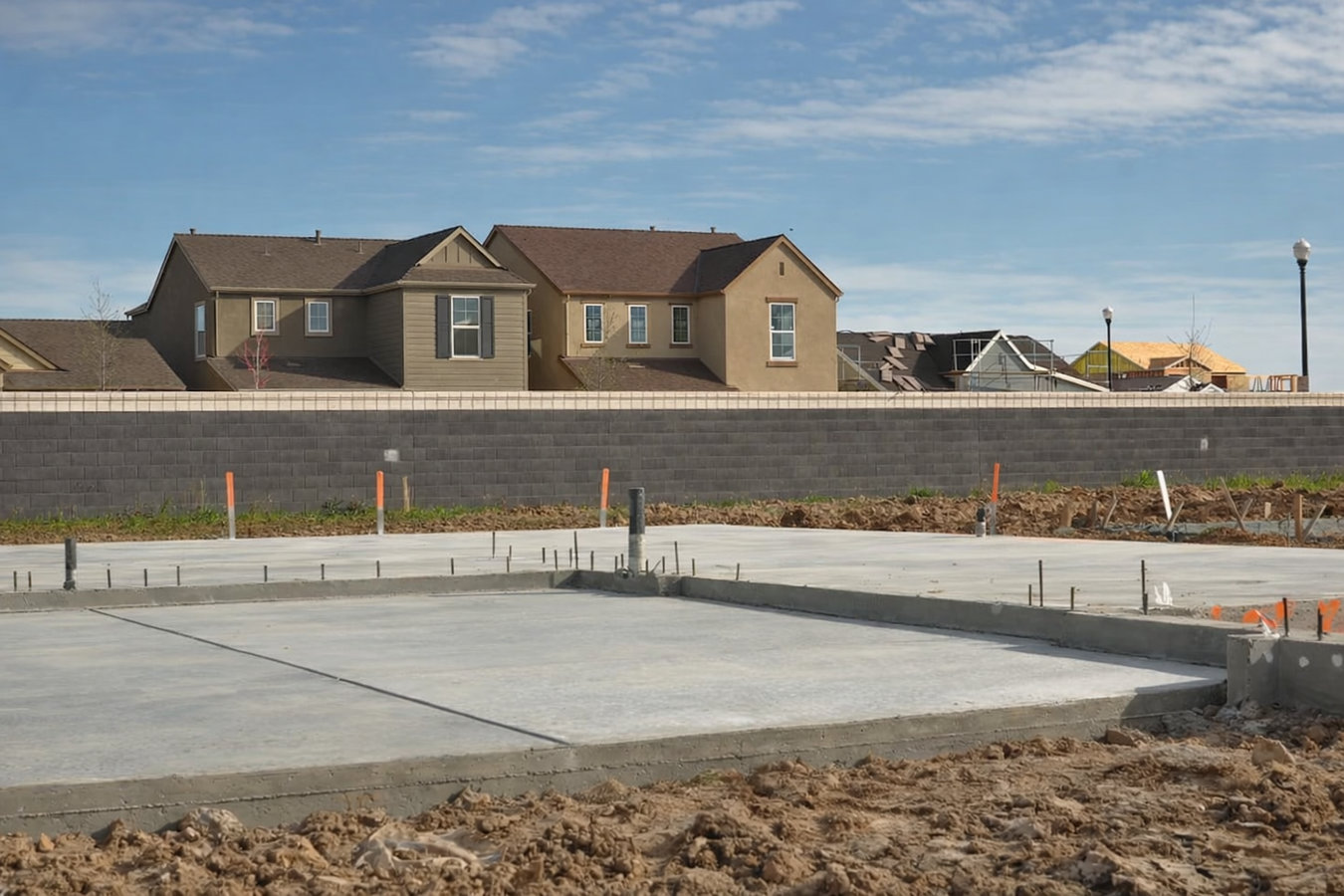
Building an ADU, addition, or new structure? We pour reinforced slab foundations designed for Castro Valley clay soil and seismic requirements - with Alameda County permits handled from start to finish.
Slab foundation building in Castro Valley means preparing the ground, placing steel reinforcement, and pouring a single flat layer of concrete that serves as both the floor and the structural base of your structure - most residential projects take one to two weeks of active work once the Alameda County permit is approved.
If you are planning an accessory dwelling unit, a garage, a room addition, or a new structure on a vacant lot in Castro Valley, the slab is where the entire project starts. No framing, no walls, and nothing else can move forward until the foundation is in place and inspected. Getting this step right - with the correct depth, reinforcement, and moisture barrier for local soil conditions - determines how the structure performs for decades.
For projects that also require concrete footings for posts or structural columns, our concrete footings service can be combined with the slab work so everything is done in one coordinated project rather than two separate mobilizations.
If you are planning an ADU, garage, room addition, or new build on a Castro Valley lot, a slab foundation is typically the first step. In Alameda County, ADU permits have become increasingly common, and nearly all of them require a permitted slab. Getting a contractor involved early - before you finalize plans - helps avoid design choices that create foundation complications later.
Small hairline cracks in aging concrete are normal. Cracks wider than about a quarter-inch, cracks that run diagonally from door corners, or sections where one side sits higher than the other indicate the slab has shifted unevenly. In Castro Valley, clay soil movement is a leading cause of this pattern, and it is worth having a professional assess whether repair or full replacement is the right answer.
When a slab settles unevenly, the structure above shifts with it. If doors that used to swing freely now stick, or if gaps have opened up between baseboards and the floor, the foundation below may be moving. These are early signals that catching now is far less expensive than waiting until the movement worsens.
If your floors feel damp, flooring is peeling or bubbling, or there is a persistent musty smell at the base of walls, moisture may be coming up through the slab. This is a known issue in parts of Castro Valley where older slabs were poured without an adequate moisture barrier - a problem that a new slab built to current standards corrects from the start.
We handle the complete process: site assessment, permit application through the Alameda County Building and Safety Division, excavation and grading, soil compaction, gravel base, moisture barrier installation, steel reinforcement placement, the concrete pour, and finish work. The county inspector visits before the pour to verify steel and subgrade preparation - we coordinate that inspection and make sure it happens on schedule. You receive the signed permit documentation when the job is complete.
For projects that extend beyond the slab itself, our foundation installation service covers raised perimeter foundations and full replacement projects on existing homes. If the scope of your project also includes standalone support footings, our concrete footings work can be scheduled alongside the slab for a single coordinated project.
Designed for accessory dwelling units in Castro Valley - built to current county requirements with seismic reinforcement and a moisture barrier standard.
Suits detached or attached garages where a clean, level, well-drained floor is the starting point for everything built on top.
For homeowners expanding their living space with a bump-out or addition - tied to the existing structure according to Alameda County plan requirements.
Full residential slab for a new home or structure on a vacant or cleared lot, designed to California seismic and building code standards.
Castro Valley sits in the East Bay foothills on clay-heavy soil that swells in winter and shrinks in summer. That seasonal movement is one of the most common causes of slab cracking in this area, and a contractor who ignores it - by skipping proper compaction, under-reinforcing the slab, or cutting corners on the moisture barrier - leaves you with problems that show up years later when the ground does what Bay Area ground does. We design every slab for the actual conditions on your lot, not a one-size-fits-all spec. The Portland Cement Association maintains detailed guidance on slab-on-grade construction practices that reflect the kind of conditions common in the Bay Area.
The Hayward Fault runs just a few miles west of Castro Valley, which puts this area in one of the most seismically active regions in the country. California building codes require foundations here to be designed with that in mind - more steel, stricter inspection checkpoints, and specific construction details. We serve Castro Valley neighborhoods along with nearby communities including San Ramon and Dublin, where slab foundation projects follow similar East Bay soil and seismic requirements.
We ask a few questions about your project, then schedule a site visit before giving you any numbers. Castro Valley lots vary too much in grade, access, and soil conditions for a phone quote to be accurate. The visit takes 30 to 60 minutes and costs nothing.
Once you agree to move forward, we handle the permit application with the Alameda County Building and Safety Division. Review typically takes one to three weeks. We build that time into your project schedule from the start so there are no surprises.
After permit approval, we excavate, grade, compact, lay the gravel base, install the moisture barrier, and place steel reinforcement. The county inspector verifies everything before any concrete is poured - this step is not optional and we never skip it.
The concrete pour happens in a single day. The slab then cures for at least a week before framing can begin - rushing this is the most common cause of long-term cracking. We schedule the final county inspection and hand you the signed permit documentation when the job is done.
We respond within 1 business day. No commitment required - just a clear, written price for your specific Castro Valley lot.
(510) 947-6192We account for East Bay clay soil in every slab we build - deeper edge footings, added reinforcement, and a proper moisture barrier are not upgrades here, they are standard. Castro Valley's seasonal soil movement is predictable if you plan for it from the start.
As an unincorporated community, Castro Valley's permits run through the county rather than a city department. We submit the application, coordinate the inspection, and make sure the permit is issued in your name - so you have the documentation you need if you ever refinance or sell.
The Hayward Fault is a few miles from most Castro Valley homes, and California's seismic construction requirements are non-negotiable here. Every slab we pour includes the steel reinforcement and construction details that the county inspector will verify - building to that standard is not optional in this area.
Castro Valley gets most of its rain between November and March. We give you honest advice about project timing and, if your schedule pushes into the wet season, a specific plan for protecting the site - not a vague promise that it will be fine.
Foundation work is one of the highest-stakes decisions a homeowner can make - you cannot see the preparation after the concrete is poured. We build every slab to the same standard we would want under our own homes, with the documentation to prove it was done right.
When your project requires a full perimeter or raised foundation rather than a flat slab, our foundation installation service covers the full scope of excavation, forming, and concrete work.
Learn moreEvery slab foundation is supported by footings around its perimeter - if you need standalone footings for a deck, gate post, or structural column, that service is available separately.
Learn moreAlameda County permit slots fill up during the dry season - reach out now to lock in your project timeline before the rainy season arrives.