Serving Castro Valley, CA and surrounding areas. (510) 947-6192
Adding a deck, room addition, retaining wall, or fence? We design and pour concrete footings for Castro Valley clay soil and seismic requirements, with Alameda County permits handled from the first call.
Concrete footings in Castro Valley are the underground base that holds up decks, additions, retaining walls, and fences - most residential footing projects take one to two days of active work, plus the time needed for Alameda County permit review and concrete curing before framing can begin.
Think of a footing as the feet of a structure. If they are not planted firmly in stable ground, everything above them can shift, lean, or crack over time. In Castro Valley, that challenge is real: the area sits on Diablo clay and similar expansive soils that swell when wet and shrink when dry - a cycle that repeats every year and gradually pushes shallow footings out of position. Getting the depth right, and using adequate steel reinforcement inside the concrete, is what keeps a structure stable across decades of wet winters and dry summers.
For projects that go beyond individual footings into full structural foundations, our foundation installation service covers the complete scope of a raised perimeter or replacement foundation.
If your deck slopes noticeably in one direction, or the boards feel springy or uneven in a way they did not before, the footings underneath may have shifted. In Castro Valley, expansive clay soils can push footings up and down over years of wet and dry cycles, causing exactly this kind of gradual movement. This is worth having a contractor look at before the problem worsens - a shifted footing is much easier to address than a collapsed structure.
Visible cracks - especially diagonal ones at corners, or cracks wider at one end than the other - often signal that the foundation or footing underneath has moved. Castro Valley's combination of clay soils and seismic activity makes this kind of cracking more common here than in areas with more stable ground. Not every crack is an emergency, but any crack that has appeared recently or seems to be growing deserves a professional opinion.
Any new structure that attaches to your home or bears significant weight needs proper footings before construction begins. This is required by Alameda County building code, and skipping it puts both the structure and your home's resale value at risk. If you are in the planning stage for any addition or outdoor structure, a conversation about footings should happen before you finalize the design.
Fence posts set in concrete footings that have failed will lean, wobble, or pull away from the fence line. On Castro Valley's hillside lots, water runoff can erode the soil around a post footing over time, or clay soil movement can push the post out of plumb. A leaning post means the footing beneath it has lost its grip - replacing just the post without addressing the footing will result in the same problem repeating.
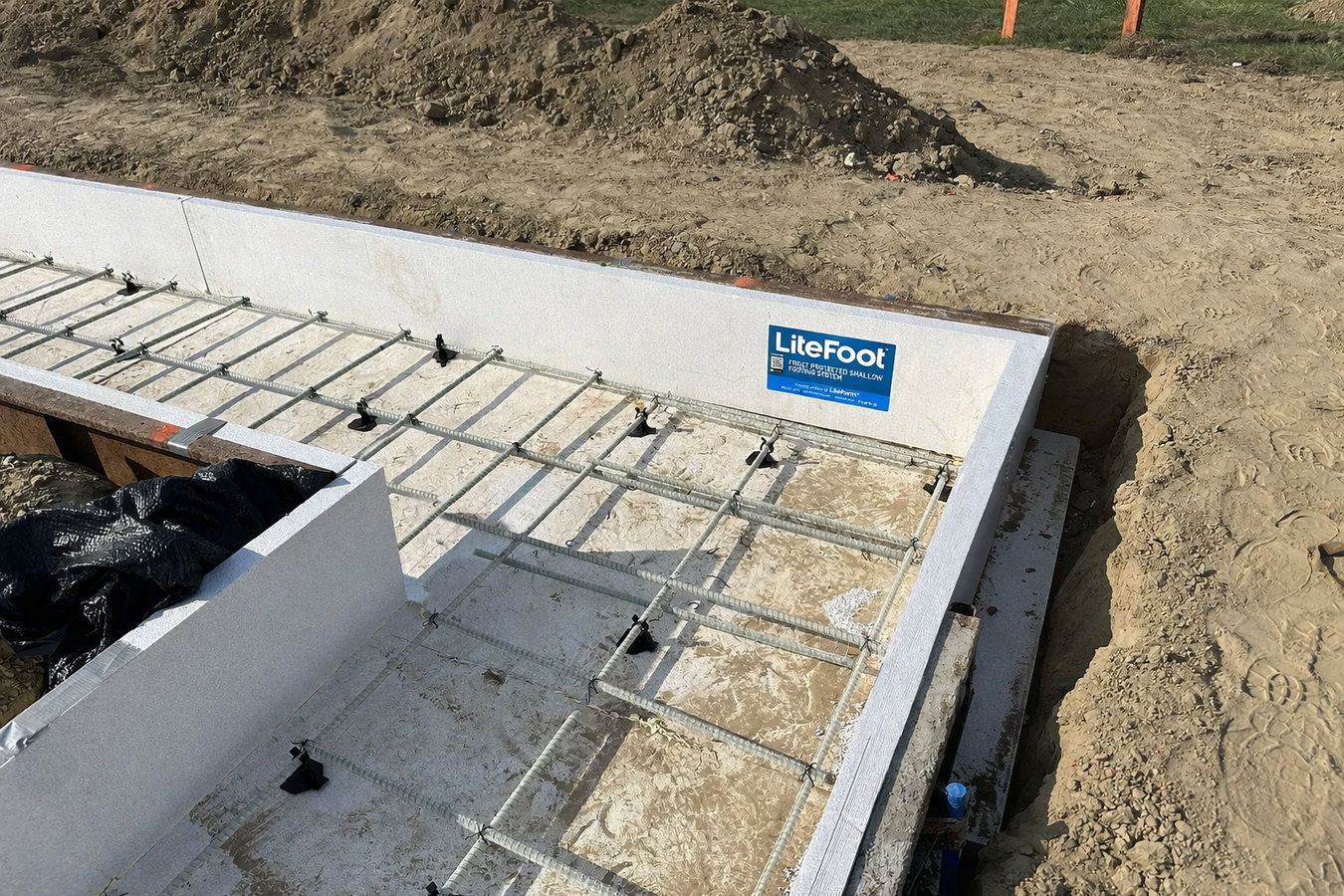
We handle every step: site assessment, Alameda County permit application, utility locating through the 811 service, excavation to the correct depth for your soil and structure, forming, steel reinforcement placement, the concrete pour, and site cleanup. The county inspector verifies the footing depth and steel before we pour - we coordinate that inspection and make sure it happens on schedule. You receive the permit documentation when the project is complete, which protects your home's records for refinancing or resale.
For projects where the footings support a full raised or perimeter foundation, our foundation installation service covers that larger scope. If your project also requires footings that sit beneath a slab, our foundation raising service handles structural lifting and underpinning work where existing foundations have settled.
For homeowners adding or replacing a deck, porch, or covered patio - designed for the load, depth, and seismic requirements that apply on your specific Castro Valley lot.
For structural footings supporting a new room addition or bump-out, tied into the Alameda County permit for the larger project.
For concrete or masonry retaining walls on hillside lots that need a deep, reinforced base to stay in place through wet winters and soil movement.
For gate posts, fence posts, or structural columns that need a solid concrete base in clay soil that will not allow them to lean or sink over time.
The Diablo clay and similar expansive soils found throughout Castro Valley's hillside neighborhoods behave in ways that generic footing specs do not account for. Soil that expands when wet and contracts when dry creates vertical pressure on footings from below - and on a sloped lot, it also creates lateral pressure from the uphill side. Footings designed without accounting for these forces will shift, and whatever they are holding will shift with them. The U.S. Geological Survey tracks the Hayward Fault and associated seismic risk zones across the East Bay, and that proximity is a genuine structural design factor for footings in this area - not just a formality.
Castro Valley is also an unincorporated Alameda County community, which changes where permits come from and who inspects the work. We handle footing projects throughout Castro Valley and serve neighboring communities including San Leandro and Union City, where similar clay soil profiles and hillside conditions shape how footing work is done.
We ask what you are building and roughly where on the property, then schedule a site visit before giving you any numbers. Hillside lots in Castro Valley require an in-person assessment - slope, soil access, and proximity to the structure all affect depth and cost in ways a phone quote cannot capture. You can expect a reply within 1 business day.
After the site visit, we give you a written estimate that breaks out digging, forming, concrete, steel, and permit fees. Once you move forward, we submit the Alameda County permit application. County review adds one to two weeks - we build that into your schedule from the start so the timeline stays predictable.
Before any digging, we initiate the 811 utility-marking request - this is required by California law and protects your property. On pour day, we excavate to the correct depth, set forms, and place steel reinforcement inside. The county inspector verifies depth and steel before we pour - that inspection is non-negotiable.
The pour itself usually takes a few hours for a typical residential project. After the county inspection passes, the concrete needs at least one week before framing can begin - and about a month to reach full strength. We give you a specific curing timeline and handle the final permit sign-off so you have the documentation ready for the next phase of your project.
We respond within 1 business day. No commitment required - just a clear, written price based on your actual Castro Valley lot and what you are building.
(510) 947-6192We account for Castro Valley's expansive clay soils in every footing we design - deeper excavation where conditions demand it, more steel reinforcement where lateral forces are a factor, and honest advice about whether your specific lot needs anything beyond a standard depth. This is something a contractor from outside the East Bay will often miss.
Living near the Hayward Fault means seismic load is a real design factor, not a checkbox. Every footing we pour for a permitted project includes the steel reinforcement the county inspector will verify - because building to that standard is the only way to protect what is sitting on top of the footing when the ground moves.
Because Castro Valley is unincorporated, permits come from the county rather than a city department. We pull permits as a standard part of every project, coordinate the county inspection, and hand you the signed documentation when the work is complete. That paper trail protects your home's value and your ability to pull future permits without complications.
Castro Valley has 12 service areas across the East Bay hills and valley floor, and conditions vary significantly from one neighborhood to the next. We do not quote footing work by phone for hillside properties - the only way to give you an accurate number is to look at the slope, soil, and access in person. That visit costs nothing and takes 30 to 45 minutes.
A footing is invisible once the work is done, which is exactly why it matters so much. The quality of what is underground determines how the structure above it performs for decades - and the permit and inspection record is the only proof that it was done correctly.
When an existing foundation needs to be lifted to add usable space or address settlement, foundation raising builds on the same footing principles but at a larger structural scale.
Learn moreFor projects that require a full perimeter or raised foundation rather than individual footings, our foundation installation service covers the complete scope from excavation to final inspection.
Learn moreDry season permits fill up early - reach out now so we can get your application in and your project on the calendar before the rainy season arrives.